
Tooth Filling: Procedure Steps, Materials, Recovery, and Longevity
Clinically authored by Dr. Nidhal Sultan, a dental healthcare professional specializing in cosmetic dentistry and digital implantology, which is the field of...
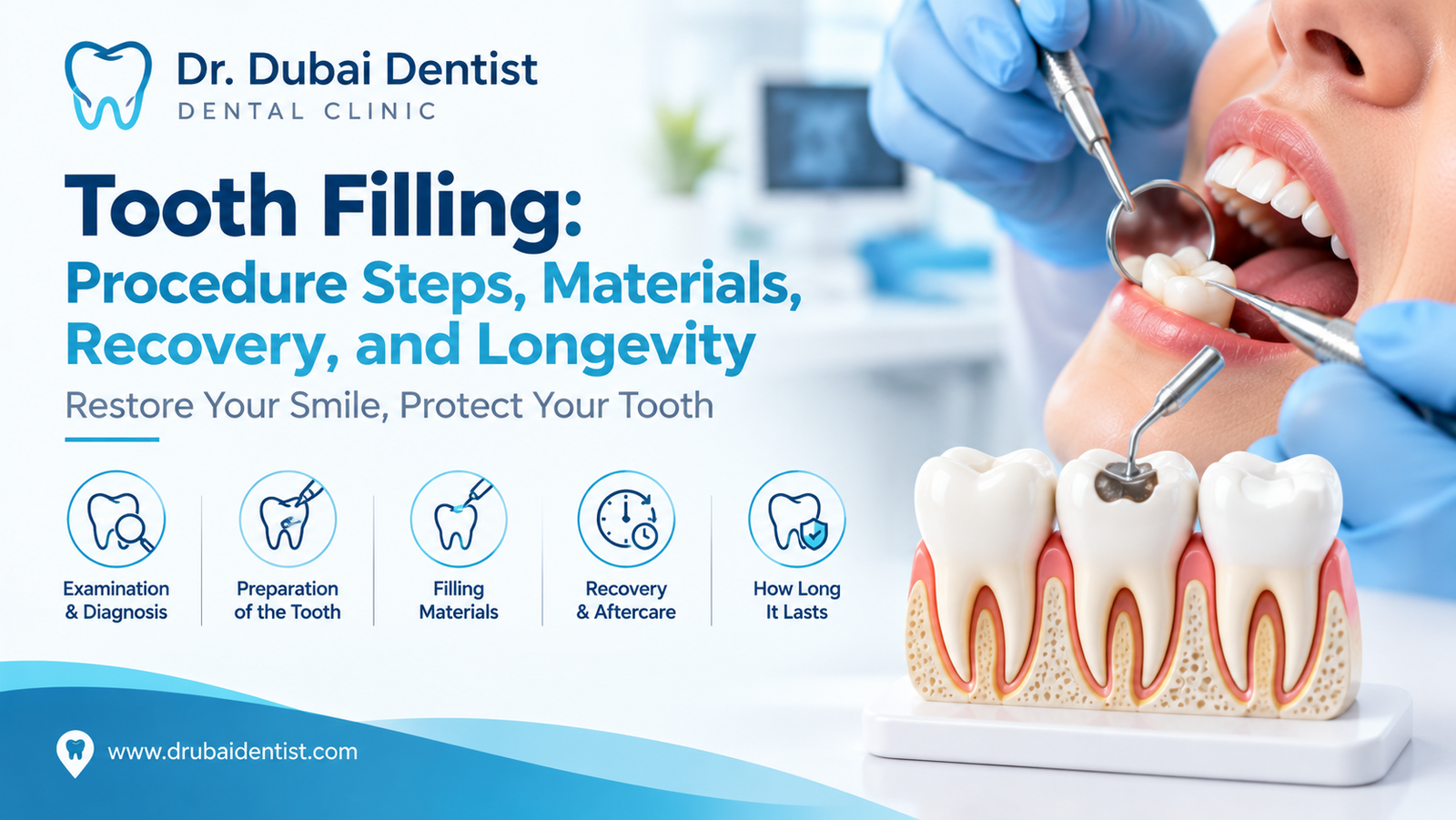
Clinically authored by Dr. Nidhal Sultan, a dental healthcare professional specializing in cosmetic dentistry and digital implantology, which is the field of placing artificial dental roots to replace missing teeth, practicing at Saudi German Clinic (Damac Hills 2) and HMS Mirdif Hospital in Dubai, UAE.
A tooth filling repairs structural damage from dental decay, restores normal chewing function, and seals exposed dentin against invasive oral bacteria. Modern restorative techniques preserve healthy natural enamel using shade-matched tooth-colored resins rather than invasive mechanical preparations. Understanding your material options, the restorative steps, and aftercare helps you safeguard oral health comfortably and prevent recurrent structural tooth breakdown.
Key Takeaways
- A tooth filling stops bacterial demineralization, restores tooth integrity, and prevents bacterial penetration into dental pulp tissue.
- Modern nanohybrid composite resin bonds directly to enamel and dentin, conserving sound tooth structure without mechanical undercuts.
- Local anesthesia and dental dam isolation provide painless, moisture-free conditions for durable adhesive bonding.
- Post-operative bite discomfort is frequently resolved through simple occlusal refinement using articulating paper.
- Routine cleanings, nightguards for bruxism, and meticulous hygiene preserve restorations for ten to fifteen years.
What Is a Tooth Filling and Why Is It Necessary?
A tooth filling is a direct restorative treatment designed to remove decayed enamel and replace lost tooth volume with biocompatible materials.
When dietary sugars interact with bacterial plaque, acids demineralize outer enamel surfaces. According to the World Health Organization (WHO) Oral Health Programme, untreated dental caries remains the most common noncommunicable condition globally.
Without prompt intervention, bacterial infection penetrates inner dentin tubules and jeopardizes nerve vitality inside the dental pulp chamber.
How Untreated Cavities Progress Through Enamel and Dentin
Enamel lacks living nerve cells, meaning early demineralization rarely causes noticeable pain.
Once bacteria breach the dentino-enamel junction, decay accelerates rapidly through microscopic dentin tubules toward vascular pulp tissue.
Timely intervention with comprehensive restorative dentistry treatments in Dubai halts decay progression before extensive endodontic root canal therapy becomes unavoidable.
What Happens If You Ignore a Cavity for Too Long?
Ignoring decay permits active bacterial colonies to reach blood vessels and sensory nerves inside the tooth root.
This biological invasion triggers acute pulpitis, severe throbbing pain, periapical abscess development, and systemic inflammatory spread.
Extensive coronal destruction eventually eliminates the structural support required for a standard restoration, requiring extraction or full-coverage prosthetics.
Signs You Might Need a Tooth Filling
Recognizing the early warning signs of tooth decay protects natural dentition from complex structural breakdowns.
While acute discomfort flags advanced pathology, early decay often produces subtle, localized physical signs.
Subtle Symptoms Beyond Obvious Tooth Pain
Routine dental checks reveal several clinical indicators requiring restorative treatment:
- Sharp sensitivity to cold water, iced drinks, or sugary confections that disappears quickly after swallowing.
- Persistent food impaction between adjacent teeth caused by rough, cavitated enamel margins.
- Visible brown, chalky white, or dark shadow spots showing beneath the translucent enamel surface.
- Rough or jagged tooth surfaces felt repeatedly by the tip of your tongue.
- Dental floss consistently tearing, shredding, or catching at the contact point between specific teeth.
Can You Need a Filling If Your Tooth Does Not Hurt at All?
Yes, many teeth requiring restoration remain entirely asymptomatic because early enamel decay cannot trigger sensory pain signals.
Digital bite-wing radiographs reveal interproximal lesions developing quietly between tightly positioned teeth.
Treating asymptomatic decay preserves significantly more natural tooth structure than waiting for acute pain to emerge.
Comparing Tooth Filling Materials: Composite, Ceramic, Glass Ionomer, and Amalgam
Selecting the optimal restorative material depends on tooth location, bite forces, aesthetic preferences, and remaining tooth volume.
Modern tooth-mimicking materials aim to reproduce the natural flexibility, thermal expansion, and wear resistance of natural enamel.
| Material Type | Expected Lifespan | Aesthetic Match | Bonding Mechanism | Primary Clinical Use |
|---|---|---|---|---|
| Direct Composite Resin | 7–12 years | Exact tooth match | Micromechanical adhesive bond | Anterior and posterior routine restorations |
| Ceramic (Porcelain Inlay/Onlay) | 15–20+ years | Superior lifelike translucency | Resin cementation | Large restorations with lost cusp integrity |
| Glass Ionomer Cement (GIC) | 5–7 years | Moderate (opaque) | Chemical chelation to calcium | Root surface decay, primary teeth, cervical wear |
| Dental Amalgam (Silver) | 10–15 years | Metallic (non-aesthetic) | Mechanical retention (undercuts) | Historical posterior restorations |
Composite Tooth Filling vs Silver Amalgam
A modern composite tooth filling relies on microscopic glass particles embedded in an acrylic matrix, blending seamlessly with surrounding enamel.
Unlike silver amalgam, composite resins bond micromechanically to etched enamel and dentin without requiring aggressive cutting of healthy tooth walls.
Patients seeking seamless anterior restorations benefit from advanced direct cosmetic dental bonding techniques for teeth that restore fractured edges naturally.
Glass Ionomer Cements and Fluoride Release
Glass ionomer materials chemically bond to tooth minerals and slowly release fluoride ions into adjacent dental tissues.
This sustained chemical release helps remineralize affected margins and lowers recurrent decay risks in high-susceptibility patients.
Their lower tensile strength makes them best suited for low-load zones such as cervical margins and non-stress-bearing root surfaces.
Why Is Dental Amalgam Being Phased Out Internationally?
Global regulatory bodies continue to reduce amalgam usage to protect environmental water reservoirs and address patient preferences for biocompatibility.
Official guidance from the U.S. Food and Drug Administration (FDA) Dental Devices Division advises non-mercury alternatives for vulnerable populations, including pregnant women, nursing mothers, and individuals with pre-existing renal conditions.
Advanced nanohybrid composite resins now provide compressive strength comparable to historical metals without aesthetic drawbacks.
Step-by-Step: What Really Happens During the Tooth Filling Procedure?
Understanding every phase of the restorative workflow removes fear of the dental chair and clarifies treatment goals.
Modern clinical protocols prioritize profound anesthesia, strict moisture isolation, and precise material layering.
Clinical Preparation and Isolation with Dental Dams
Your dental specialist begins by numbing the surrounding gingival tissues using buffered local anesthetics.
A non-latex rubber dental dam is placed around the target tooth to isolate it completely from saliva, tongue movements, and oral moisture.
Moisture isolation remains critical; salivary contamination compromises resin bond strength and causes early restoration failure.
Decay Removal, Etching, and Adhesive Bonding
Micro-rotary instruments or gentle air abrasion tools remove bacterial caries while protecting sound enamel walls.
The prepared cavity receives a phosphoric acid gel conditioner that cleans the surface and creates microscopic porous enamel channels.
A fluid primer and adhesive resin penetrate these pores, forming a durable hybrid layer that seals the underlying dentin tubules.
Incremental Composite Layering and Light Curing
Your practitioner inserts composite resin in small increments no thicker than two millimeters at a time.
Incremental placement minimizes polymerization shrinkage stress, preventing post-operative sensitivity and marginal micro-cracks.
A specialized high-intensity blue LED light polymerizes each resin layer within twenty seconds, hardening the restoration instantly.
Articulating Paper and Occlusal Bite Adjustments
Once the material cures, your clinician refines anatomical cusps, grooves, and ridges to mirror original tooth anatomy.
You bite down on colored articulating paper to mark microscopic high points where opposing teeth make early or heavy contact.
Ultra-fine diamond burs polish the composite to a smooth glaze, preventing plaque retention and tongue irritation.
Does Getting a Tooth Filling Hurt? Pain Management and Anxiety Care
Modern restorative treatments are designed to proceed comfortably without acute procedural discomfort.
Topical numbing gels desensitize the gum surface before fine-gauge computerized or manual anesthesia delivery.
How Modern Local Anesthetics Eliminate Procedural Discomfort
Local anesthetics such as articaine or lidocaine temporarily block sensory nerve sodium channels, halting pain signal transmission entirely.
You may feel gentle pressure or water spray vibrations, but the tooth itself remains profoundly numb throughout decay removal.
If you experience any sharp sensation, your dental specialist can administer supplementary anesthesia immediately.
Why Am I Terrified of the Dental Drill Sound and Vibration?
Auditory and tactile vibration fears stem from past traumatic experiences or heightened sensory sensitivity.
Clinics utilize high-speed electric handpieces that minimize high-pitched whines and reduce mechanical chatter against the bone.
Patients with severe apprehension benefit from proven strategies for overcoming dental anxiety easily, including noise-canceling headphones, breathing exercises, and mild sedation options.
Tooth Filling vs. Inlay, Onlay, or Dental Crown
Direct dental repair techniques deliver reliable results when sufficient natural enamel and dentin support remain intact.
When decay compromises more than half of the tooth width or destroys functional cusps, indirect laboratory restorations become necessary.
| Restoration Type | Structural Tooth Loss | Cusp Coverage | Fabrication Process | Long-Term Durability |
|---|---|---|---|---|
| Direct Tooth Filling | Mild to moderate (less than 40%) | None; internal cavity walls only | Single visit; shaped directly in the chair | Moderate to high |
| Indirect Inlay | Moderate internal loss (40–50%) | None; fits between cusps | Milled via CAD/CAM or dental laboratory | High structural stability |
| Indirect Onlay | Extensive (one or more cusps broken) | Protects and caps damaged cusps | Precision laboratory fabrication | Exceptional cusp-fracture prevention |
| Full Dental Crown | Severe destruction (over 70%) | Complete 360-degree tooth encirclement | Digital scans, milling, and cementation | Maximum structural reinforcement |
The Tooth Preservation Hierarchy
Preserving natural tooth structure remains the primary clinical objective of modern biomimetic dentistry, which focuses on nature-mimicking tooth preservation techniques that recreate the natural biomechanics of original tooth structures.
A direct tooth filling represents the least invasive step, preserving original enamel architecture whenever structural boundaries permit.
For extensive cusp fractures, reviewing evaluating tooth crown before and after results clarifies when full-coverage prosthetics offer superior structural stability over an overextended direct filling.
Recovery and Aftercare: What to Eat and Managing Post-Op Sensitivity
Post-treatment recovery is typically swift, allowing most individuals to resume ordinary daily routines right away.
Simple aftercare precautions ensure the new restoration integrates smoothly with your bite.
How Long Does a Tooth Filling Take to Set?
A composite tooth filling cures completely under high-intensity blue light, reaching maximum mechanical hardness before you leave the clinic.
Silver amalgam restorations, by contrast, require twenty-four hours to set fully and resist strong bite forces.
Regardless of material, eating while your lips and tongue remain numb presents a risk of accidental soft-tissue biting.
Eating Precautions While Numb
Protect your oral tissues by following these simple dietary guidelines during initial recovery:
- Wait until local anesthesia fades completely (typically two to three hours) before chewing solid meals.
- Stick to cool or room-temperature liquids such as water, broth, or smooth yogurt during the numbing period.
- Avoid crunchy chips, sticky toffees, and hard nuts for the first twenty-four hours to prevent localized bruising.
- Chew meals primarily on the untreated side of your mouth during the first day.
Why Does My Tooth Hurt After a Filling? Troubleshooting Symptoms
Mild thermal sensitivity or slight gingival tenderness is common following cavity preparation and adhesive bonding.
Understanding normal post-op sensations helps differentiate healing tissues from structural bite imbalances.
| Reported Symptom | Probable Underlying Cause | Clinical Remedy |
|---|---|---|
| Sharp, sudden pain when chewing firm foods | High bite occlusion, which means how your teeth meet when chewing | Quick occlusal buffing with articulating paper |
| Transient cold sensitivity lasting a few seconds | Reversible pulpitis from mechanical vibration | Desensitizing toothpaste; resolves in 1–2 weeks |
| Spontaneous, throbbing pain keeping you awake | Irreversible pulpitis or deep nerve exposure | Clinical vitality check; endodontic treatment |
| Localized gum tenderness near the tooth collar | Tissue irritation from dental dam clamps | Warm salt water rinses; resolves within 48 hours |
Reversible vs Irreversible Pulpitis
Reversible pulpitis involves temporary inflammation within dental pulp blood vessels, resolving as the nerve calms over several days.
According to research cataloged in the National Center for Biotechnology Information (NCBI) Restorative Database, persistent pain lingering past thirty seconds indicates irreversible nerve damage.
Irreversible pulpitis requires endodontic therapy or root canal therapy because the damaged pulp cannot heal on its own.
Why Does My Filling Hurt Only When I Bite Down on Food?
Pain that occurs strictly during bite contact indicates that your restoration sits even a fraction of a millimeter too high.
This microscopic elevation concentrates entire jaw closing forces onto one single tooth, bruising the periodontal ligament.
A three-minute bite adjustment with articulating paper removes high points and quickly relieves ligament soreness.
How Long Does a Tooth Filling Last and How to Extend Its Lifespan
A well-placed composite restoration typically provides reliable service for seven to twelve years with consistent care.
Longevity depends on patient oral hygiene, dietary sugar frequency, masticatory bite forces, and nocturnal clenching habits.
Recognizing Signs of Marginal Leakage or Failing Restorations
Over several years, repetitive chewing forces and thermal expansion can weaken the microscopic adhesive bond.
Watch for key signs of restoration wear:
- Dark staining or discolored lines forming around the restoration borders, indicating bacterial microleakage.
- Chipped resin edges that feel sharp to your tongue or catch food particles.
- Recurrent cold sensitivity in a tooth that previously felt completely comfortable for years.
- A loose or mobile sensation when biting down on fibrous foods.
Enhancing your hygiene routine with effective methods to remove plaque from teeth protects restoration margins against secondary decay.
Recent Developments in Restorative Dentistry: Biomimetic Curing and Material Safety
Restorative dentistry has advanced beyond simple cavity excavation toward biomimetic preservation strategies that faithfully replicate natural dentin and enamel properties.
Modern nanohybrid resins blend nanometer-sized zirconia, an ultra-strong white ceramic material used for resilient dental restorations, and silica fillers, reducing polymerization shrinkage stress below two percent.
Digital intraoral scanning and chairside milling now allow clinicians to preserve fragile cusps with bonded ceramic overlays.
Patients prioritizing aesthetics also select aesthetic composite bonding solutions in Dubai clinics to restore fractured edges and enhance smiles without unnecessary enamel reduction.
Frequently Asked Questions About Tooth Filling
Does getting a tooth filling hurt?
No. Local anesthesia completely numbs the target tooth and adjacent gingival tissues before treatment begins. Patients experience gentle physical pressure and cooling water spray during cleaning, but the procedure remains comfortable throughout decay removal and resin placement.
How long does a tooth filling last?
A modern composite tooth filling typically lasts seven to twelve years, while indirect porcelain inlays often exceed fifteen years. Practicing daily flossing, brushing with fluoride toothpaste, attending routine professional cleanings, and wearing nightguards for bruxism maximize restoration longevity.
What are the different types of tooth fillings?
Primary restorative materials include tooth-colored composite resins, lab-milled ceramic porcelain, fluoride-releasing glass ionomers, and historical silver amalgams. Nanohybrid composites remain the clinical standard for everyday direct restorations due to their balanced aesthetics and tooth preservation.
Why is my tooth sensitive to cold weeks after a filling?
Mild cold sensitivity can persist for a few weeks as dental pulp tissues recover from decay removal and rotary vibration. If sensitivity continues beyond two weeks, throbs spontaneously, or hurts during biting, visit your clinician for an occlusal check.
Can a tooth filling fall out while flossing or eating sticky candy?
Yes. Very sticky sweets like caramel or vigorous lateral flossing can dislodge a restoration if recurrent decay has undermined the underlying bond. If a filling loosens, keep the area clean and contact your dental specialist promptly.
Is it normal to feel a sharp edge on my new filling with my tongue?
Your tongue quickly identifies microscopic textural differences. While new restorations feel slightly different initially, any noticeably sharp or rough margin should be smoothed and polished by your clinician to avoid soft tissue abrasions.
What should I do if my filling feels too high when chewing?
Never wait for a high filling to wear down on its own. Chewing forces on an elevated restoration bruise the periodontal ligament, triggering persistent bite pain. Schedule a brief visit for quick occlusal refinement using articulating paper.
How soon after a tooth filling can I drink coffee or brush my teeth?
You can drink lukewarm coffee and brush your teeth immediately after a composite tooth filling because the resin cures instantly. However, avoid intensely hot beverages until local numbness subsides completely to prevent accidental burns.
Resources and Further Reading
- U.S. Food and Drug Administration (FDA): Comprehensive safety reviews, patient advisories, and international guidance regarding dental amalgam materials.
- National Center for Biotechnology Information (NCBI) StatPearls: Peer-reviewed clinical documentation on cavity preparation stages, restorative dental materials, and pulpitis pathology.
- World Health Organization (WHO): Global clinical oral health assessments, cavity prevention benchmarks, and restorative healthcare protocols.
Grounding Sources
- [1] World Health Organization (WHO) Oral Health Programme
- [2] U.S. Food and Drug Administration (FDA) Dental Devices Division
- [3] National Center for Biotechnology Information (NCBI) Restorative Database
Conclusion
A tooth filling remains the most effective, biologically conservative treatment to arrest dental decay, protect inner nerve vitality, and restore functional mastication. Choosing modern nanohybrid composite materials allows your dental specialist to recreate natural tooth contours while conserving sound enamel. Maintaining regular dental assessments ensures restorations are placed comfortably and monitored for long-term health.
Ready to Take the Next Step?
If you are experiencing tooth sensitivity, notice chipped enamel, or need a gentle, precise tooth filling to replace older discolored restorations, our team offers dental care tailored to your aesthetic and health goals. Visit Dr. Nidhal Sultan at our premium clinics within Saudi German Clinic (Damac Hills 2) or HMS Mirdif Hospital. Explore our bespoke restorative options and schedule your private consultation with Dr. Nidhal Sultan to preserve and restore your confident smile today.