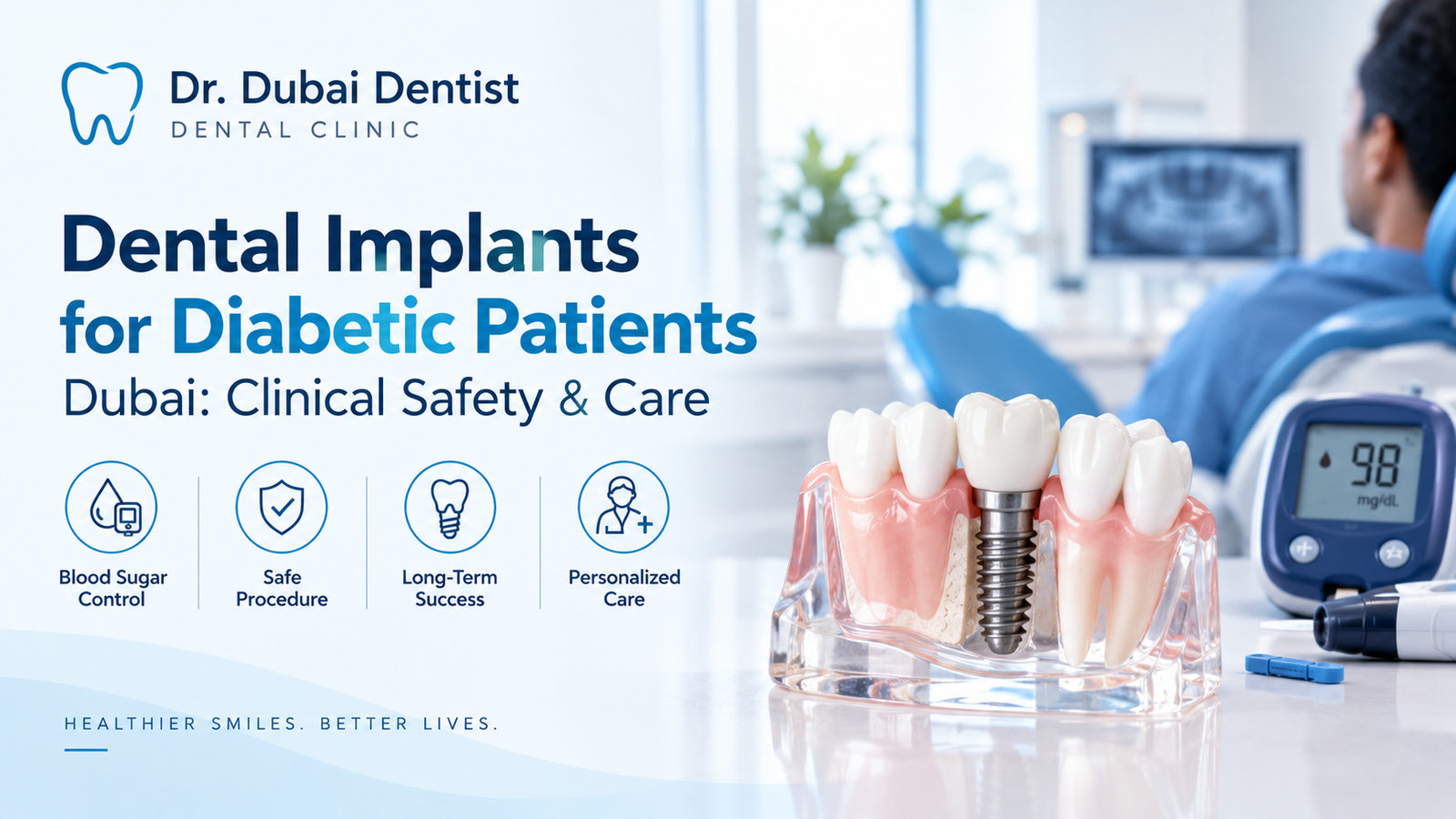
Dental implants for diabetic patients Dubai: Clinical Safety & Care
Written by Dr. Nidhal Sultan, Dental Surgeon, in collaboration with Dr. Ali Aldibbiat, Consultant Endocrinologist in Dubai, providing evidence-based metabolic and restorative...
Written by Dr. Nidhal Sultan, Dental Surgeon, in collaboration with Dr. Ali Aldibbiat, Consultant Endocrinologist in Dubai, providing evidence-based metabolic and restorative surgical guidance for patients across the UAE.
Securing dental implants for diabetic patients dubai requires precise glycemic stabilization, specialized surgical planning, and strict collaboration between your endocrinologist and oral surgeon. Living with diabetes does not exclude you from permanent teeth replacement. When blood glucose metrics meet target ranges, surgical success rates match those of healthy non-diabetic individuals.
Key Takeaways
- Controlled blood sugar (HbA1c ≤ 7.0%) yields implant success rates exceeding 95%, comparable to individuals without diabetes (Systematic Review).
- Elevated glucose impairs bone healing by delaying microvascular blood supply and stunting osteoblast bone deposition.
- Endocrinology clearance is essential in Dubai to ensure stability before invasive surgical procedures.
- Ramadan fasting, summer heat, and regional lifestyle factors require customized surgical scheduling and hydration tracking.
- Prophylactic antibiotics and antimicrobial rinses significantly reduce the primary risks of infection and early implant failure.
Can Diabetic Patients in Dubai Safely Receive Dental Implants?
Yes, individuals living with diabetes can safely undergo tooth replacement surgery when systemic blood glucose is well controlled.
In the past, chronic metabolic disorders were seen as absolute contraindications for surgical placement. Modern surgical innovations have changed this perspective completely.
Today, Dubai clinical protocols prioritize your metabolic stability over the simple diagnosis of diabetes.
What HbA1c Level Is Required for Dental Implants?
The primary benchmark for evaluating surgical readiness is your Glycated Hemoglobin (HbA1c) level. This test reflects average blood sugar over the previous eight to twelve weeks.
Clinical guidelines established by the American Dental Association (ADA) Science & Research Institute confirm that controlled patients show wound healing and bone recovery patterns similar to non-diabetic cohorts.
Below is the standard clinical matrix used to assess surgical risk:
| Glycemic Category | HbA1c Level | Surgical Risk Level | Clinical Recommendation |
|---|---|---|---|
| Optimal Control | Under 7.0% | Low (Baseline) | Proceed with standard implant surgery and routine infection precautions. |
| Moderate / Conditional | 7.1% – 8.0% | Moderate Risk | Proceed with caution; require prophylactic antibiotics, extended integration times, and close follow-ups. |
| Poor Control / High Risk | Above 8.0% | Elevated Risk | Postpone elective surgery; initiate targeted metabolic therapy to lower glucose before treatment. |
Isolated daily glucose readings do not provide enough data for surgical clearance.
Sustained glycemic stability protects tissue regeneration, whereas sudden glucose spikes can disrupt initial cellular adhesion.
Patients with unstable readings require customized Type 2 diabetes management plans in Dubai to safely reach surgical eligibility.
Can You Get Dental Implants if You Have High Blood Sugar?
Surgical placement should never be performed during active, unmanaged hyperglycemia.
When glucose runs persistently above clinical targets, white blood cells lose their ability to clear invading pathogens.
This biological delay leaves surgical incisions vulnerable to aggressive oral bacterial strains.
Elective procedures are paused until targeted therapy restores metabolic balance, preventing early implant loss.
The Biology of Diabetes and Bone Healing: How Blood Sugar Impacts Osseointegration
Osseointegration, which means the natural biological process where living jawbone permanently fuses to the metal post of an artificial tooth root, is essential for stability.
This process demands robust capillary growth, active osteoblasts (cells that form bone), and balanced collagen remodeling.
Hyperglycemia creates molecular hurdles that complicate these normal regenerative phases.
How Does Diabetes Affect Osseointegration?
High systemic sugar levels accelerate the accumulation of Advanced Glycation End-products (AGEs).
These biochemical compounds bind to cellular receptors known as RAGE, triggering persistent low-grade tissue inflammation.
This inflammatory cascade triggers several physiological obstacles:
- Accelerated death (apoptosis) of bone-building osteoblast cells.
- Impaired microvascular blood supply, starving regenerating bone of oxygen and nutrients.
- Weakened collagen matrices, reducing total bone-to-implant contact (BIC).
- Exaggerated osteoclast action, which breaks down existing bone faster than it can rebuild.
Why Do Dental Implants Fail in Diabetic Patients?
Implant failure in diabetic patients stems from two distinct phases: early healing failure and late infectious breakdown.
Early failure occurs within the first twelve weeks when the bone fails to physically knit around the fixture.
Late failure is driven by peri-implantitis, an inflammatory bacterial infection causing bone loss around previously healed posts.
Recent data published in PubMed (Cohort Study, 2015–2024 data) demonstrates that time-varying HbA1c levels of 8.0% or higher approximately double the hazard rate for peri-implantitis over long-term follow-up.[2] [3]>
Recent Clinical Updates: Hydrophilic Implants and Continuous Glucose Monitoring
Clinical protocols for placing dental implants for diabetic patients dubai have advanced significantly over the past two years.
Modern implantology, which is the specialized field of oral surgery dedicated to replacing missing teeth with artificial roots, now pairs bioengineered surface materials with real-time metabolic diagnostics.
These dual innovations have expanded treatment eligibility for patients previously considered poor surgical candidates.
Modern Implant Surface Technologies
Specialized implants now feature chemically modified, hydrophilic (water-attracting) titanium and zirconia (a durable, tooth-colored ceramic material used in modern dentistry) surfaces.
Unlike conventional machined surfaces, these microscopic textures pull blood proteins and mesenchymal stem cells onto the implant body within minutes of placement.
This accelerated cellular recruitment jumpstarts initial bone healing, helping bypass diabetic microvascular delays.
Continuous Glucose Monitoring Integration
Surgical clinics throughout the UAE increasingly rely on Continuous Glucose Monitors (CGMs) rather than intermittent fingerstick tests.
CGM sensors provide twenty-four-hour glycemic curves, highlighting asymptomatic nocturnal glucose spikes that routine testing misses.
Reviewing these glycemic trends ensures the surgical team operates during proven metabolic stability.
Patients can consult a dedicated continuous glucose monitoring guide to understand how real-time biofeedback protects tissue regeneration.
Type 1 vs. Type 2 Diabetes: Key Differences in Dental Implant Planning
While both conditions feature elevated blood sugar, their underlying biological mechanisms require tailored surgical precautions.
Autoimmune destruction differentiates Type 1 diabetes, whereas peripheral insulin resistance defines Type 2.
These clinical differences require specific adaptations during surgical workups.
| Clinical Parameter | Type 1 Diabetes Consideration | Type 2 Diabetes Consideration |
|---|---|---|
| Primary Pathophysiology | Autoimmune beta-cell loss; absolute insulin deficiency. | Peripheral insulin resistance; progressive secretory defect. |
| Glycemic Volatility | High risk of rapid glycemic swings and acute hypoglycemia. | More predictable, gradual day-to-day blood sugar shifts. |
| Bone Mineral Density | Often associated with lower baseline bone mineral density. | Normal to dense bone, but often with compromised microarchitecture. |
| Surgical Scheduling | Early morning slots immediately following morning insulin and meal. | Morning appointments aligned with standard oral hypoglycemic dosing. |
| Specialist Coordination | Rigorous insulin dosage titrations before and after surgery. | Coordinated adjustments of oral agents or GLP-1 receptor agonists. |
Managing systemic autoimmune disorders requires close monitoring of skeletal density before drilling into the jawbone.
A comprehensive assessment of your bone and mineral health identifies microstructural weaknesses early.
This extra diagnostic step prevents unstable initial fixture fixation.
Pre-Surgical Clinical Protocols: Endocrinology Clearance and Diagnostic Workup in Dubai
Undergoing safe surgery begins weeks before you sit in the dental chair.
Specialized restorative care across the UAE follows a structured, cross-disciplinary medical pathway.
This protocol ensures zero guesswork regarding your systemic healing capacity.
What Tests Are Needed Before Getting Dental Implants?
Your surgical diagnostic panel requires both local radiographic imaging and systemic hematology testing:
- Cone Beam Computed Tomography (CBCT): Specialized 3D dental X-ray imaging, which provides detailed views of jawbone height, width, and nerve pathways.
- HbA1c Blood Panel: Laboratory verification of three-month glycemic control.
- Fasting Blood Glucose: Baseline morning glucose confirmation on the day of surgery.
- Serum Fructosamine: Evaluates short-term glycemic shifts over the preceding two to three weeks when recent medication changes have occurred.
- Complete Blood Count (CBC): Confirms healthy white blood cell levels to defend against post-surgical pathogens.
Securing Physician Clearance
Implant dentists in Dubai will request an official medical clearance letter from your treating endocrinologist.
This formal document outlines your diabetes duration, current prescriptions, recent glycemic trends, and cardiovascular stability.
Direct communication between specialists ensures medication adjustments, such as withholding specific blood thinners or balancing insulin, proceed smoothly.
Working directly with an experienced diabetes specialist in Dubai ensures all clearance paperwork meets stringent clinical governance standards, which are the official quality and patient-safety rules enforced by healthcare regulators.
Surgical and Post-Operative Considerations: Minimizing Infection and Accelerating Healing
The actual placement of dental fixtures must be modified when operating on patients with systemic metabolic conditions.
Minimally invasive techniques preserve local blood supplies and protect sensitive soft tissues.
Do Diabetics Need Prophylactic Antibiotics Before Dental Implant Placement?
Yes, pre-operative antimicrobial coverage is strongly advised for diabetic surgical candidates.
Current recommendations from the International Team for Implantology (ITI) advise administering a high-dose oral antibiotic, such as amoxicillin or clindamycin, one hour prior to tissue incision.
This targeted preventive dose creates high serum drug levels, preventing oral bacteria from colonizing the newly prepared osteotomy site.
Antimicrobial regimens typically continue for five to seven days post-surgery alongside 0.12% chlorhexidine mouth rinses (Systematic Review).[4] [5]>
Adjusted Healing Timelines and Loading Protocols
Healing timelines are naturally extended in diabetic bone tissue.
While healthy non-diabetic jaws typically achieve stable integration within eight to twelve weeks, diabetic bone tissue demands extra healing time.
Surgeons generally observe a prolonged integration phase of sixteen to twenty weeks before placing functional biting pressure on the implant.
Using Resonance Frequency Analysis (RFA), the surgeon tracks your implant stability quotient (ISQ) objectively before securing final crowns.
Ramadan Fasting, Diet, and Lifestyle Considerations for UAE Diabetic Implant Patients
Undergoing dental surgery in the UAE requires careful attention to regional lifestyle factors, climate extremes, and cultural traditions.
Fasting during the holy month of Ramadan significantly alters meal timings, hydration levels, and medication schedules.
These sudden shifts can produce sharp blood sugar swings if not proactively managed.
Ramadan Surgical Precautions
Elective implant surgery should ideally be scheduled outside of fasting periods.
Altered nutritional schedules during Suhoor and Iftar can disrupt glycemic control, delaying early wound closure.
Furthermore, managing post-operative pain and taking prescribed antibiotics is difficult while abstaining from fluids and food.
If surgery must occur near fasting periods, read our detailed guidance on managing diabetes safely during Ramadan to avoid dangerous glycemic drops.
Managing Summer Heat and Shisha Consumption
Dubai summer temperatures frequently exceed 40°C, accelerating dehydration.
Dehydration concentrates blood sugars, reducing salivary flow and concentrating oral bacteria around healing gums.
Simultaneously, regular shisha smoking introduces intense heat and toxic carbon monoxide into oral tissues.
Nicotine causes severe vasoconstriction, choking off local microvascular blood flow and drastically multiplying the odds of implant failure.
Long-Term Maintenance: Preventing Peri-Implantitis in Diabetic Patients
The journey toward permanent teeth replacement does not end once the implant crown is attached.
Patients living with diabetes face ongoing risks of late tissue breakdown if oral hygiene falters.
A systematic review in PubMed (Systematic Review, 2025 search data) confirms that diabetic individuals with optimal glycemic maintenance (HbA1c ≤ 7.0%) preserve bone stability comparable to healthy cohorts over long observation windows.
Daily Home Care and Professional Hygiene Recalls
Protecting your investment demands disciplined daily plaque removal:
- Use interdental brushes or specialized water flossers twice daily to clean around implant abutments.
- Clean daily with non-abrasive antimicrobial toothpastes to protect soft tissue collars.
- Schedule professional maintenance cleanings every three to four months instead of the standard six-month interval.
- Seek urgent evaluation if you detect bleeding, tenderness, or loosening around the implant.
Frequently Asked Questions About dental implants for diabetic patients dubai
What determines success for dental implants for diabetic patients dubai?
Success primarily depends on maintaining consistent glycemic control with an HbA1c below 7.0% (Systematic Review), secu[1]ring endocrinologist clearance, taking prophylactic antibiotics, and following a gentle post-operative oral hygiene routine. In practice, patients should confirm the diagnosis, review benefits and risks, understand follow-up needs, and ask when specialist medical advice is required.
My dentist said no to implants because of my diabetes—should I get a second opinion?
Yes, seeking a second opinion from an experienced surgical team is entirely reasonable. Many practitioners reject diabetic patients out of outdated caution. When modern diagnostic protocols, hydrophilic implant fixtures, and collaborative medical clearance are applied, stable surgical outcomes are reliably achieved.
What should I do if my blood sugar spikes the day of my implant surgery?
Contact your surgical team immediately if morning readings spike above recommended thresholds. Operating during acute, uncontrolled hyperglycemia impairs clotting, elevates infection hazards, and hampers healing. Your surgeon and endocrinologist may reschedule the placement until safe glycemic balance is re-established.
Is the dental implant failure rate higher for diabetics in Dubai?
Clinical data confirms failure rates are not higher for patients whose blood sugar is properly regulated. When HbA1c is maintained under 7.0%, success rates exceed 95%, matching non-diabetic averages (Systematic Review). Elev[1]ated failure rates occur primarily when individuals undergo unmonitored surgery with uncontrolled, elevated blood glucose.
How long does it take for dental implants to heal in diabetic patients?
Complete healing and bone integration usually take sixteen to twenty weeks for diabetic individuals, compared to eight to twelve weeks for non-diabetics. This extended window allows microvascular blood vessels and osteoblasts sufficient time to construct stable bone around the titanium fixture.
Can I get dental implants in Dubai if I have Type 1 diabetes?
Yes, individuals with Type 1 diabetes can safely receive implants provided their condition is closely regulated. Surgery requires meticulous insulin timing, continuous glucose tracking, and extended bone healing intervals to ensure strong, long-lasting osseointegration.
Do dental implants hurt more or take longer to heal if you have diabetes?
The surgical procedure itself is completely painless under local anesthesia. However, post-operative soft tissue recovery often takes a few extra days due to compromised microcirculation. Strictly adhering to your prescribed antibiotic and antiseptic rinse regimen prevents discomfort and complications.
Resources and Further Reading
- PubMed Systematic Review on Diabetic Implant Outcomes: High-level evidence confirming osseointegration success across controlled diabetic patient populations.
- PubMed Cohort Study on Peri-Implantitis Risks: Long-term clinical analysis highlighting the direct relationship between elevated HbA1c and implant complications.
- International Team for Implantology (ITI) Consensus: International restorative protocols covering surgical adaptations, loading sequences, and antibiotic prophylaxis in compromised bone.
Grounding Sources
- [1] nih.gov
- [6] American Dental Association (ADA) Science & Research Institute
- [7] International Team for Implantology (ITI)
- [8] PubMed Systematic Review on Diabetic Implant Outcomes
- [9] PubMed Cohort Study on Peri-Implantitis Risks
Conclusion
Modern clinical advancements have made obtaining dental implants for diabetic patients dubai predictable, highly effective, and safe. Navigating surgery requires transparent communication between your dental practitioner and your metabolic physician. By maintaining target HbA1c levels, utilizing modern hydrophilic fixtures, taking prophylactic antibiotics, and following dedicated hygiene schedules, you can restore full chewing function and aesthetic confidence without compromising your long-term health.
Dr. Nidhal Sultan contributed this guest article. Read more from Dr. Nidhal Sultan.
Ready to Take the Next Step?
If you are planning restorative dental surgery and need a thorough medical evaluation, comprehensive diagnostic workup, or an official pre-surgical clearance certificate, schedule an in-depth clinical consultation with Dr. Ali Aldibbiat, Consultant Endocrinologist in Dubai to stabilize your metabolic health today. Pinpointing which of the possible dental implants for diabetic patients dubai applies to you clarifies your diagnosis, treatment plan, and follow-up.