Anti snoring device: Clinical Guide to Types, Efficacy, and Airway Health
Anti snoring device: Clinical Guide to Types, Efficacy, and Airway Health Clinically curated by Dr. Nidhal Sultan, specialized dental healthcare professional, focusing...
Anti snoring device: Clinical Guide to Types, Efficacy, and Airway Health
Clinically curated by Dr. Nidhal Sultan, specialized dental healthcare professional, focusing on dental sleep solutions, precision prosthodontics, and restorative airway management in Dubai, UAE.
An effective anti snoring device can stop chronic nighttime airway vibration, protect your dental health, and restore quiet sleep for your partner. Snoring occurs when relaxed pharyngeal tissues collapse into the upper respiratory pathway. Choosing between over-the-counter guards and custom oral appliance therapy depends on your specific airway anatomy, bite alignment, and underlying sleep apnea risks.
What Is an anti snoring device and How Does It Work Mechanically?
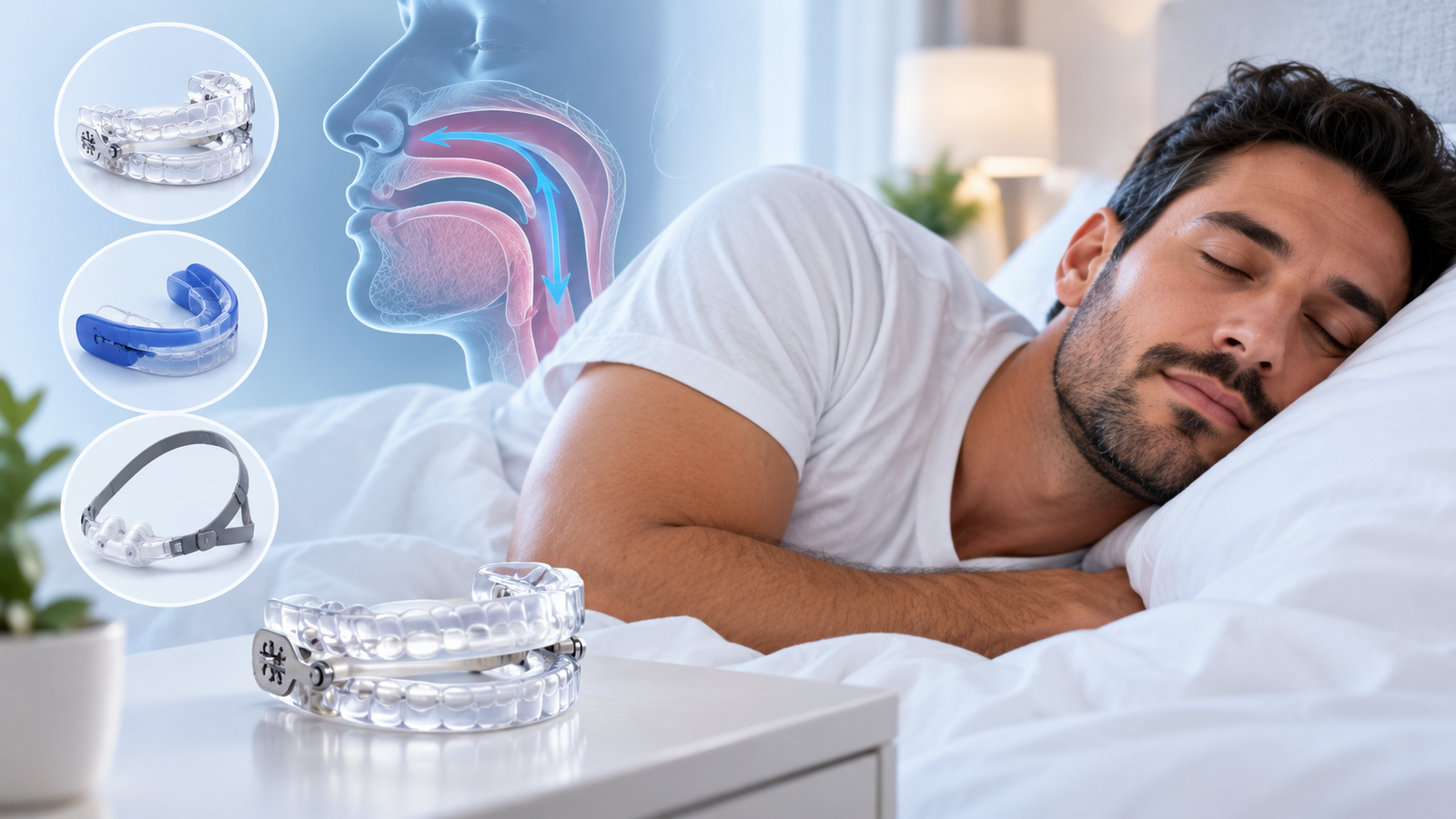
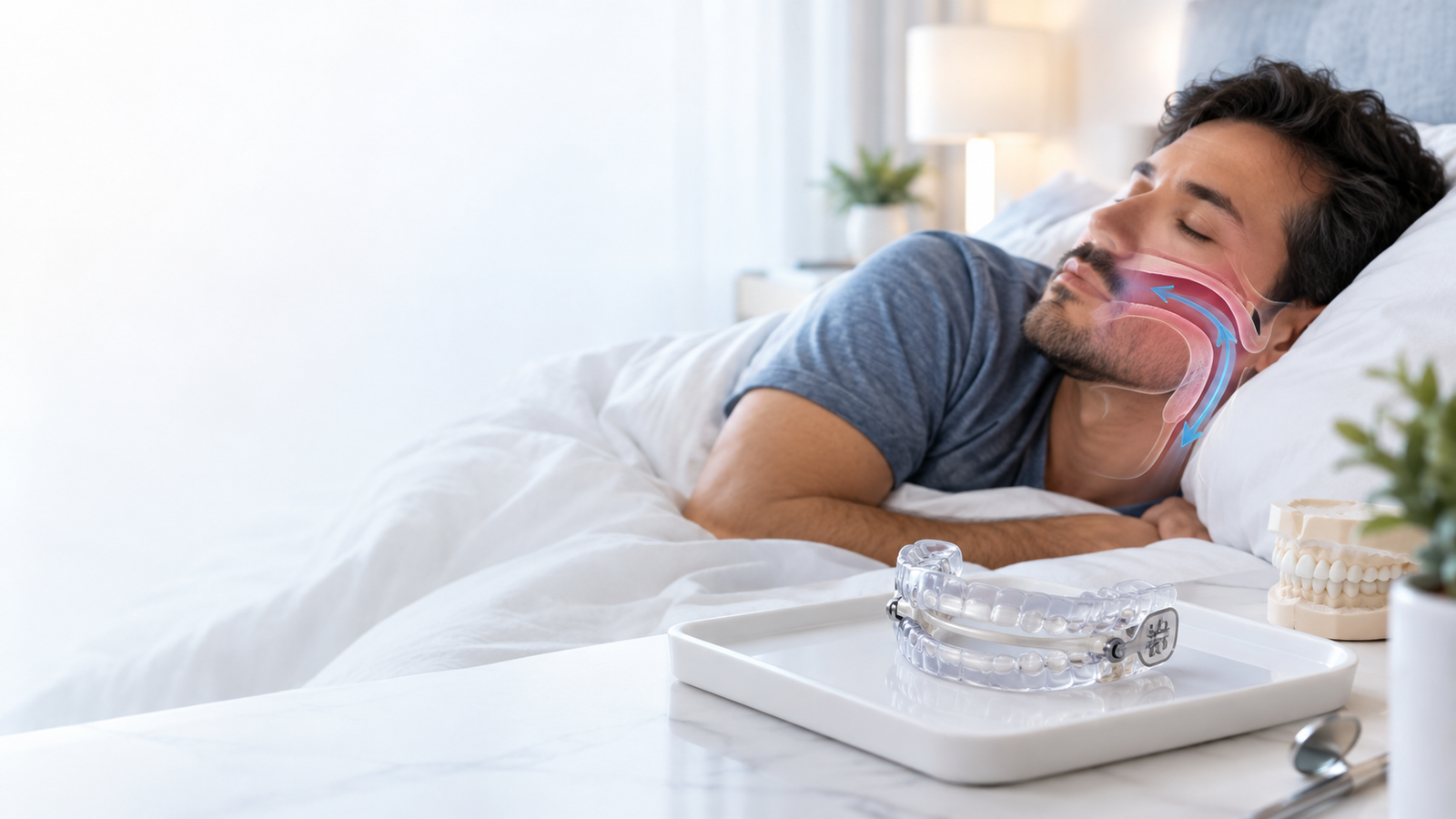
An anti snoring device is a therapeutic apparatus designed to maintain an unobstructed upper airway during sleep. When muscle tone decreases during deep sleep, soft tissues in the oral cavity and throat relax.
This relaxation narrows the airway lumen, causing rapid airflow turbulence. As air forces past these constricted tissues, they vibrate against each other, producing the acoustic sound of snoring.
Mechanically, different devices target specific points of airway resistance according to established medical principles documented by the National Center for Biotechnology Information:
- Mandibular protrusion: Shifting the lower jaw forward to pull the tongue base and epiglottis away from the posterior pharyngeal wall.
- Tongue stabilization: Securing the tongue anteriorly using negative suction pressure to prevent retroglossal collapse.
- Nasal stenting: Mechanically dilating the nasal valve to reduce upstream inspiratory resistance.
- Expiratory resistance: Increasing positive end-expiratory pressure to stent the airway open naturally.
Soft Palate Flutter vs. Retroglossal Tongue Collapse
Not all snoring originates from the exact same anatomical structure. Identifying your primary site of airway vibration determines which therapeutic mechanism will succeed.
Palatal flutter occurs when the uvula and soft palate vibrate against the back of the throat. This is common in individuals with elongated soft palates or enlarged tonsils.
Retroglossal collapse happens when the base of the tongue falls backward during supine sleep. A mandibular advancement splint or tongue-stabilizing unit is required to mechanically pull that tissue forward.
The Physics of Upper Airway Resistance
Upper airway collapse follows the fluid dynamics of the Bernoulli principle. As airway diameter narrows, the velocity of inhaled air must increase to satisfy lung volume demands.
This acceleration generates negative intraluminal pressure, pulling flexible throat walls inward. An oral anti snoring device counteracts this suction by physically enlarging cross-sectional airway dimensions.
Primary Snoring vs. Obstructive Sleep Apnea: Essential Diagnostic Screening
Before selecting any anti snoring device, it is essential to distinguish between primary benign snoring and Obstructive Sleep Apnea (OSA). Snoring is the primary auditory symptom of both conditions.
Primary snoring involves turbulent airflow without complete airway obstruction, significant oxygen desaturation, or neurological sleep fragmentation.
Obstructive Sleep Apnea is a serious medical disorder characterized by repetitive partial (hypopnea) or complete (apnea) airway blockages throughout the night. These episodes trigger systemic hypoxia and sympathetic nervous system spikes.
Common clinical warning signs that distinguish OSA from simple snoring include:
- Witnessed gasping, choking, or snorting sounds during sleep.
- Excessive daytime sleepiness and chronic morning brain fog.
- Waking up with persistent dry mouth, sore throat, or morning headaches.
- Elevated blood pressure or nighttime cardiac arrhythmias.
Why You Should Never Mask Sleep Apnea with a Generic Mouthguard
Using an unregulated, over-the-counter anti snoring device without diagnostic testing can be dangerous. A generic guard might quiet the acoustic noise while airway closures continue undetected.
Silencing the sound without resolving internal airway resistance leaves the patient vulnerable to long-term cardiovascular risks, including hypertension, stroke, and metabolic dysfunction.
Clinical practice guidelines from the American Academy of Dental Sleep Medicine state that oral appliance therapy should always follow a formal sleep evaluation or polysomnography study.
“How do I know if my snoring is just noise or dangerous sleep apnea?”
Patients frequently wonder if loud nighttime breathing is merely an annoyance or a medical emergency. The definitive answer requires an objective sleep diagnostic test.
A Home Sleep Apnea Test (HSAT) or laboratory Polysomnography (PSG) records your Apnea-Hypopnea Index (AHI). An AHI below 5 events per hour indicates primary snoring, while higher scores confirm sleep apnea requiring coordinated medical-dental care.
The Major Types of Anti-Snoring Devices: A Comparative Clinical Breakdown
The medical and dental sleep fields utilize several device categories to manage sleep-disordered breathing. Each device targets a unique anatomical mechanism.
| Device Category | Primary Mechanism | Best Anatomic Candidate | Clinical Pros | Clinical Cons |
| Mandibular Advancement Device (MAD) | Protrudes the lower jaw forward to widen the retroglossal airway. | Tongue-base collapse, retrognathic jaw, mild-to-moderate OSA. | High clinical success rate; custom-calibrated; quiet and non-invasive. | Requires healthy dentition; potential transient morning jaw stiffness. |
| Tongue-Retaining Device (TRD / TSD) | Holds the tongue forward via anterior silicone suction bulb. | Edentulous patients, periodontal limitations, severe gag reflex for MADs. | No pressure on teeth or TMJ; works with missing teeth. | Lower patient compliance; tongue irritation; salivation changes. |
| Nasal Dilator (Internal / External) | Springs open the nasal alar cartilage to reduce nasal resistance. | Nasal valve collapse, deviated septum, seasonal rhinitis. | Non-invasive; inexpensive; immediate relief for nasal stuffiness. | Cannot correct pharyngeal or tongue-base airway collapse. |
| Expiratory Positive Airway Pressure (EPAP) | Micro-valves create backpressure upon exhalation to stent airway. | Mild positional snorers, frequent travelers avoiding CPAP. | Disposable; highly portable; no electrical power required. | Requires strict nasal breathing; exhaling against resistance can feel unnatural. |
| Neuromuscular Electrical Stimulation (tES) | Delivers mild daytime or nighttime electrical pulses to tone genioglossus muscle. | Mild tongue-base collapse with preserved muscle response. | Non-invasive oral daytime wear; leaves teeth free during sleep. | Requires ongoing session adherence; variable clinical airway widening. |
Mandibular Advancement Devices (MAD)
Mandibular Advancement Devices represent the gold standard in dental sleep medicine. These two-piece oral appliances fit over both dental arches and connect via precision lateral hinges, straps, or expansion screws.
By repositioning the mandible forward in millimeter increments, the MAD tightens the palatoglossus and genioglossus muscles. Systematic reviews in PubMed confirm that custom MADs reliably reduce snoring frequency and daytime fatigue.
Tongue-Retaining Devices (TRD / TSD)
A Tongue-Retaining Device uses an anterior bulb to grasp the tip of the tongue with light negative suction. This prevents the tongue from falling backward into the pharynx.
Because TRDs do not anchor onto individual teeth, they serve as a practical alternative for patients with active periodontal disease, multiple missing teeth, or full dentures.
Nasal Dilators and EPAP Solutions
External nasal strips and internal silicone stents expand the cross-sectional area of the nasal vestibule. They reduce upper airway airflow resistance by up to 30% in patients with narrow nasal passages[1].
However, if your airway collapses behind the soft palate or tongue, nasal dilators alone will not eliminate snoring sound or airway obstruction.
Targeted Neuromuscular Electrical Stimulation (tES)
Recent technological developments introduce transcutaneous and intraoral electrical muscle stimulation. These units deliver micro-currents to the hypoglossal nerve and genioglossus muscle during wakefulness.
The goal is to increase upper airway neuromuscular tone, reducing tissue flaccidity when the patient subsequently falls asleep.
Custom Dentist-Fitted Oral Appliances vs. Over-the-Counter Boil-and-Bite Mouthguards
The marketplace offers inexpensive over-the-counter (OTC) “boil-and-bite” mouthguards alongside custom laboratory-crafted oral appliances. Understanding the differences in construction, force distribution, and safety is vital.
| Clinical Feature | Custom Dental Oral Appliance (OAT) | Over-the-Counter Boil-and-Bite |
| Diagnostic Impression | High-resolution 3D optical intraoral digital scan. | Manual hot water thermoplastic mold at home. |
| Titration Precision | Micro-adjustable in 0.25 mm to 0.5 mm increments. | Fixed advancement or coarse, unstable notches. |
| Force Distribution | Evenly distributed across the entire dental arch. | Concentrated pressure on single incisors and canines. |
| Occlusal & TMJ Safety | Monitored with custom morning aligners and bite checks. | High risk of permanent bite shift and joint pain. |
| Material Durability | Milled medical-grade nylon or dual-laminate polymer. | Soft EVA plastic prone to degradation and chewing wear. |
| Regulatory Classification | FDA-cleared Class II medical prescription device. | General commercial consumer merchandise. |
| Patient Compliance Rate | High (typically exceeding 80% long-term adherence). | Low (frequent nighttime dislodgement and mouth soreness). |
Biomechanical Retention and Periodontal Stress
A custom oral appliance is fabricated to cover every tooth evenly, distributing advancement forces across the entire periodontal ligament system.
In contrast, generic boil-and-bite devices often sit loosely against dental crowns. The forward pull of the jaw concentrates mechanical torque on the front incisors, which can cause tooth loosening or unwanted orthodontic movement.
Ensuring proper alignment and assessing overall dental structural health through comprehensive teeth alignment evaluation protects your smile throughout treatment.
Will cheap over-the-counter mouthpieces permanently ruin my bite?
This is one of the most pressing concerns raised by prospective oral appliance users online. The clinical answer is: yes, poorly fitted OTC devices carry a documented risk of dental side effects.
When an uncalibrated device applies uneven pressure nightly, teeth can tilt, rotate, or intrude into the jawbone. This leads to posterior open bites, where the back molars no longer meet correctly during daytime chewing.
Prescription devices regulated under FDA Class II special controls require clinical bite registration to preserve occlusal stability.
Digital Advances in Oral Appliance Therapy: CAD/CAM Workflows for 2026
Dental sleep medicine has moved past traditional, bulky acrylic mouthguards made from uncomfortable putty impressions. Modern dental practices now leverage fully digital manufacturing workflows.
Recent investigations highlighted by the National Institutes of Health demonstrate that 3D-printed biocompatible polymers and CAD/CAM milling improve appliance retention while reducing physical bulk in the oral cavity.
Key technical innovations defining modern oral appliance design include:
- Optoelectronic 3D Scanning: Eliminates physical trays, capturing microscopic tooth contours and gingival margins in seconds.
- Medical-Grade Polyamide Nylon: Ultra-thin, flexible, and virtually unbreakable materials that maximize tongue space.
- Integrated Digital Bite Jigs: Measuring precise protrusive distance and vertical opening to eliminate unnecessary joint strain.
- Micro-Titration Mechanisms: Built-in calibrated screws allowing incremental adjustments down to 0.1 millimeters.
Precision Micro-Titration Protocols
Airway muscles adapt gradually to forward positioning. Titration involves advancing the mandible slowly over several weeks rather than forcing an extreme position on night one.
Your dental specialist typically begins at 50% to 60% of your maximum comfortable protrusive range[2]. Incremental micro-advancements continue until snoring sounds resolve and daytime alertness is restored.
If you have existing dental restorations or require restorative enhancements, combining sleep appliance calibration with comprehensive restorative dentistry care ensures optimal functional stability.
Potential Side Effects and How Dental Specialists Prevent Them
Every mechanical intervention that repositions the mandible produces physiological forces. When supervised by a trained dental practitioner, side effects are manageable and transient.
Common initial side effects observed during the first two weeks of oral appliance use include:
- Transient morning jaw stiffness or tenderness in the masseter muscles.
- Excess salivation or brief oral dryness during early adaptation.
- A subtle feeling that the front teeth do not touch normally for 15 minutes after removal.
Managing Temporomandibular Joint (TMJ) Soreness
The temporomandibular joint houses a delicate fibrocartilaginous disc between the temporal bone and mandibular condyle. Forcing the jaw too far forward can compress retrodiscal tissues.
Specialists prevent TMJ strain by controlling the vertical opening dimension of the appliance. Keeping the bite as closed as possible while maintaining lateral protrusive airway stability relieves joint pressure.
Morning Occlusal Re-alignment Exercises
To prevent permanent bite drift, patients are prescribed a morning repositioning jig or isometric bite leaf. This small silicone device is bitten on for 5 to 10 minutes each morning.
These exercises activate the posterior temporalis and masseter muscles, seating the mandibular condyles back into their natural centric relation position before daytime chewing begins.
Why does my jaw ache every morning after wearing an oral appliance?
Morning jaw aching indicates that your device may be set too far forward or the vertical thickness is excessive for your joint anatomy. It can also stem from unconscious clenching during sleep.
Your dental practitioner can easily manage this by turning the micro-titration screw back 0.5 mm or re-evaluating your bite balance with a digital smart smile assessment.
How to Choose the Right anti snoring device: A Clinical Decision Framework
Choosing the ideal snoring intervention requires matching your symptoms, physical anatomy, and medical history with the correct appliance mechanism.
| Symptom & Anatomical Presentation | Primary Obstruction Point | Recommended Clinical Device | Alternative or Adjunctive Therapy |
| Snoring occurs strictly when sleeping flat on the back (supine). | Gravity-induced base-of-tongue collapse. | Custom Mandibular Advancement Device (MAD). | Positional sleep therapy trainer or elevated wedge pillow. |
| Snoring worsens during nasal congestion or seasonal allergies. | Nasal valve collapse and turbulent airflow. | Internal anatomical silicone nasal dilators. | Saline sinus irrigation or topical nasal steroid therapy. |
| Loud snoring with complete missing upper or lower teeth. | Pharyngeal collapse without tooth anchoring. | Tongue-Retaining Device (TRD) or CPAP therapy. | Implant-supported overdentures with integrated MAD attachment. |
| Severe snoring accompanied by witnessed choking and high AHI score. | Multilevel upper airway collapse (OSA). | Continuous Positive Airway Pressure (CPAP) or Hybrid OAT. | Custom MAD (if CPAP intolerant) under medical sleep supervision. |
| Snoring with severe morning jaw clenching and tooth wear. | Airway narrowing combined with sleep bruxism. | Dual-laminate custom CAD/CAM sleep splint. | Neuromuscular relaxation exercises and occlusal equilibrations. |
If dental treatment or long-term sleep therapy has caused apprehension, learning about modern methods for overcoming dental anxiety can make your clinical journey comfortable and supportive.
Frequently Asked Questions About anti snoring device
Which anti-snoring device works best for heavy snorers?
For individuals with heavy pharyngeal snoring, a custom-fitted Mandibular Advancement Device (MAD) is clinically proven to provide the highest success rate. It physically advances the lower jaw to expand airway volume, addressing the root mechanical cause of throat collapse.
Do dentist anti-snoring mouthpieces actually work?
Yes, dental sleep appliances are backed by extensive clinical trials and recognized by medical sleep academies worldwide. They provide an objective reduction in snoring volume and obstructive airway events when fitted and titrated by a trained dental specialist.
What is the difference between an anti-snoring mouthpiece and a CPAP machine?
A continuous positive airway pressure (CPAP) machine delivers pressurized air through a facial mask to pneumatically stent the airway open. A dental mouthpiece is a silent, non-motorized oral splint that physically positions the jaw and tongue forward without hoses or electrical power.
Can an anti-snoring device treat obstructive sleep apnea?
Custom mandibular advancement appliances are FDA-cleared as a first-line treatment for mild-to-moderate Obstructive Sleep Apnea. They also serve as an effective alternative for patients with severe sleep apnea who cannot tolerate or comply with CPAP therapy.
Can I wear an anti snoring device if I have dental crowns or veneers?
Yes, but you should avoid generic boil-and-bite guards, which place heavy lateral leverage on front teeth. A custom digital CAD/CAM appliance is designed specifically around your crowns, veneers, and restorations to distribute forces safely across the entire arch.
How long does a custom dental anti-snoring appliance last?
A precision-milled medical polymer dental appliance typically lasts between 3 to 5 years with proper care. Regular cleaning, storage in a protective ventilated case, and periodic clinical checks ensure material longevity and persistent airway calibration.
Resources and Further Reading
- National Center for Biotechnology Information (PMC) — Mandibular Advancement Devices for Obstructive Sleep Apnea and Snoring Pathophysiology.
- PubMed Central Systematic Review — Clinical Efficacy of Oral Appliance Therapy in Sleep-Disordered Breathing.
- National Institutes of Health (NIH / PMC) — Digital CAD/CAM Protocols and 3D Printed Biocompatible Polymers in Dental Sleep Medicine.
- American Academy of Dental Sleep Medicine (AADSM) — Clinical Standards for Oral Appliance Therapy.
- U.S. Food and Drug Administration (FDA) — Class II Medical Guidance for Intraoral Snoring and Sleep Apnea Devices.
Conclusion
Selecting the right anti snoring device is an essential medical and dental decision that directly influences your sleep quality, cardiovascular health, and long-term bite stability. While over-the-counter options offer quick accessibility, they lack the custom fit, titration control, and joint safety required for lasting airway relief. Custom dental oral appliance therapy provides a personalized, clinically validated approach to quiet nighttime breathing while protecting your natural dentition.
Ready to Take the Next Step?
If chronic snoring disrupts your household or leaves you exhausted each morning, receive a comprehensive clinical airway and bite evaluation. Finding the ideal anti snoring device begins with expert guidance. Schedule your personalized consultation today by getting in touch with our team through our dedicated dental consultation portal to explore precision, custom-crafted dental sleep solutions in Dubai. Book a specialist consultation to confirm your diagnosis, treatment options, safety questions, and follow-up plan.