A confident smile can change the way you speak, pose for photos, attend meetings, and connect with people. In Dubai, where personal presentation matters in both professional and social settings, more patients are searching for Veneer before and after results because they want to understand what is realistically possible before committing to treatment.
Maybe your teeth are stained and whitening no longer helps. Maybe one front tooth is chipped, uneven, too small, or slightly rotated. Or maybe you have always felt that your smile does not match the way you want to look. Dental veneers can be a precise cosmetic solution for many of these concerns, but the best outcomes do not come from simply choosing the whitest shade. They come from careful diagnosis, facially guided smile design, healthy gums, the right veneer material, and a dentist who understands both function and aesthetics.
A proper Veneer before and after consultation should answer three important questions: What can be improved? What should be preserved? And what will still look natural years from now?
This guide explains what veneers are, how they work, what dental issues they can correct, what to expect from Veneer before and after cases, and how much veneers may cost in Dubai. It also answers the practical questions patients ask before booking a consultation, including pain, staining, permanence, pregnancy, and veneer care.
What are veneers?
Dental veneers are thin, tooth-coloured shells placed over the visible front surface of the teeth. They are designed to improve the appearance of teeth by changing their colour, shape, size, length, or symmetry. Veneers are described as custom-made shells crafted from tooth-coloured materials to cover the front side of teeth, veneers can conceal chips, cracks, stains, and other cosmetic imperfections.
Think of veneers as a highly customised cover for the smile zone. They do not replace missing teeth like implants, and they do not wrap around the whole tooth like crowns. Instead, they bond to the enamel on the front of healthy teeth, which is why case selection is so important.
Common types include:
- Porcelain veneers: Custom-made ceramic shells known for a natural appearance, light reflection, and stain resistance.
- Composite veneers: Resin-based veneers sculpted directly on the tooth or fabricated indirectly.
- Ceramic veneers: A broad category that includes porcelain and advanced ceramics such as lithium disilicate.
- No-prep or minimal-prep veneers: Suitable for selected cases where little or no enamel reduction is needed.
Every Veneer before and after case should begin with a healthy foundation. If there is decay, gum inflammation, bite trauma, or severe crowding, those issues should be addressed before the cosmetic phase.
When patients compare veneers before and after photos, the most beautiful results usually have one thing in common: they still look like the patient’s own smile, only healthier, brighter, and more balanced.
How dental veneers work?
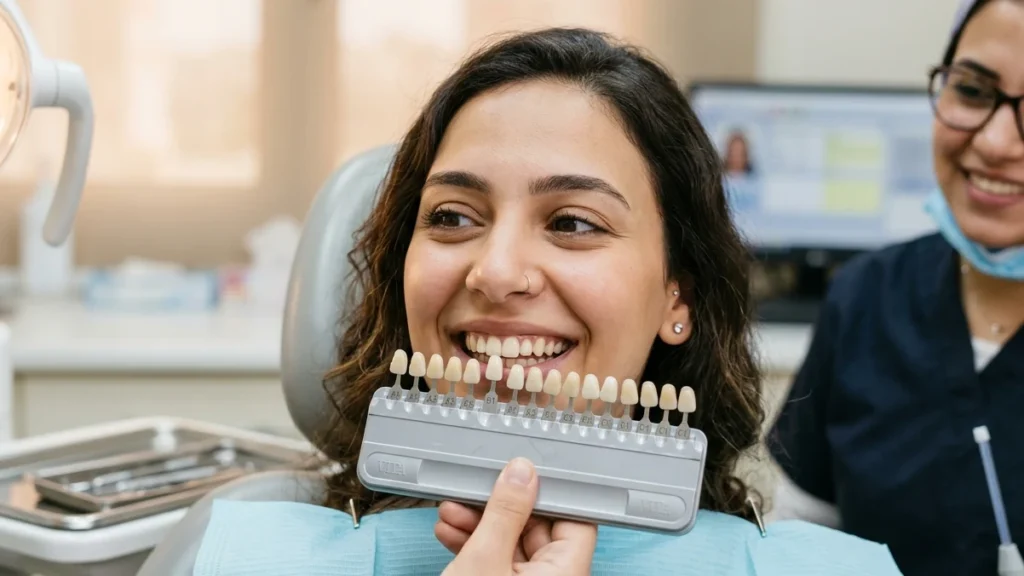
The veneer process begins with a smile assessment, not with drilling. A skilled cosmetic dentist evaluates your teeth, gums, bite, facial proportions, lip movement, tooth shade, and the reason your current smile does not feel right to you.
In a typical veneer journey, the dentist may:
- Examine your teeth and gums to make sure veneers are suitable.
- Take photographs, scans, or impressions for smile analysis.
- Discuss the shade, shape, and length you want.
- Create a digital or physical smile preview.
- Prepare the teeth, when needed, by removing a small amount of enamel.
- Place temporary veneers in some cases so you can test the look.
- Bond the final veneers using dental adhesive and cement.
- Adjust the bite and polish the final result.
Fitting porcelain veneers usually involves removing a small amount from the front of the tooth, taking an impression, and placing a thin layer of porcelain on the front surface. That is why veneers should be planned carefully and never treated as an impulse cosmetic purchase.
For many patients, the Veneer before and after process is emotional. The “before” is often connected to embarrassment, closed-mouth smiling, or avoiding photos. The “after” should feel natural, comfortable, and compatible with your face.
Read more about What is Veneers? Dental Veneers by Dr. Nidhal in Dubai.
Cosmetic Issues Dental Veneers Can Correct
Veneers are best suited for cosmetic concerns affecting the visible front teeth. They can make a dramatic difference, but they are not the right answer for every dental problem.
Dental veneers may help correct:
- Deep tooth discolouration that does not respond well to whitening
- Chipped or worn front teeth
- Small gaps between teeth
- Mild shape irregularities
- Uneven tooth edges
- Teeth that look too short or too narrow
- Slight rotations or minor cosmetic misalignment
- Old composite bonding that has stained or chipped
- Asymmetry in the smile line
Veneers are not usually ideal if you have active gum disease, untreated decay, severe crowding, heavy grinding, poor enamel support, or a bite problem that could fracture the veneer. In those cases, the dentist may recommend gum treatment, orthodontics, whitening, bonding, crowns, or a night guard before moving forward.
This is why the best dental veneers in Dubai are not just “white shells.” They are part of a personalised smile design that protects your natural teeth while improving the way your smile looks. Strong Veneer before and after planning is about harmony, not exaggeration.
how long do veneers take to make
The timeline depends on the veneer type, the number of teeth involved, and whether your case requires whitening, gum treatment, orthodontic alignment, or bite correction first.
As a general guide:
- Composite veneers may be completed in one visit or over two appointments.
- Porcelain veneers usually take two to three main visits after the consultation.
- Ceramic veneers often take around one to three weeks once scans or impressions are taken, depending on the dental laboratory and design process.
- Complex smile makeovers may take longer if temporary veneers, digital planning, gum contouring, or bite adjustments are required.
A fast result is attractive, but speed should not be the main goal. Veneer before and after success depends on planning, shade selection, tooth proportions, and accurate bonding. Rushing these steps can lead to bulky teeth, unnatural colour, gum irritation, or veneers that do not last as long as expected.
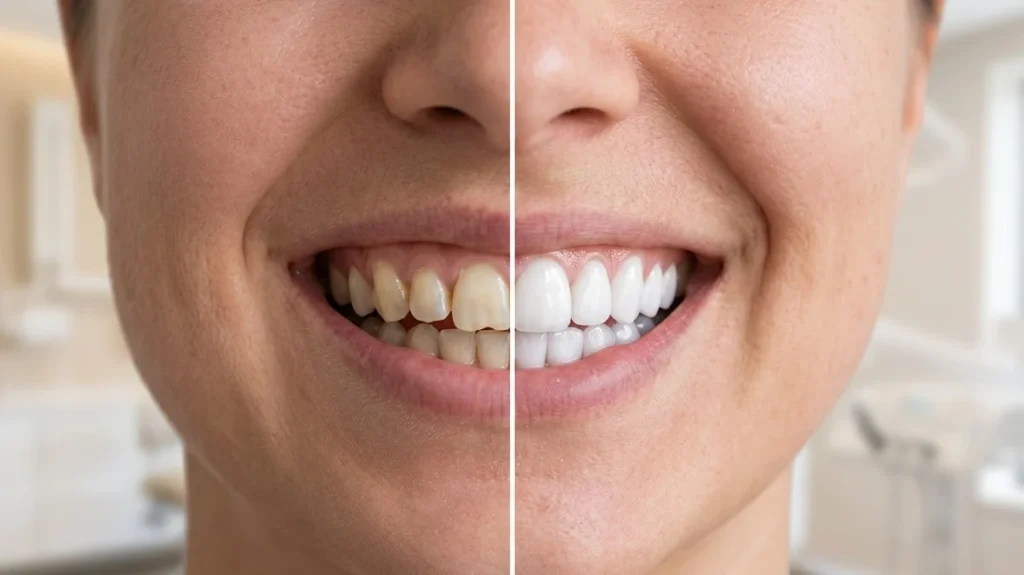
Dental Veneer before and after results
Dental Veneer before and after results can be subtle, dramatic, or somewhere in between. The right result depends on your starting point and your personal goals.
A patient with one chipped tooth may need a single veneer matched carefully to the surrounding teeth. Another patient with worn, yellowed, uneven teeth may need six to ten veneers to create a balanced smile. Someone with small side teeth may need veneers to improve proportions, while another person may need a combination of whitening, reshaping, and veneers.
What changes can you expect?
A well-planned Veneer before and after transformation may improve:
- Tooth colour
- Tooth length
- Edge shape
- Smile symmetry
- Gaps
- Visible cracks or chips
- The harmony between teeth and lips
- Confidence when smiling or speaking
However, veneers should not make every patient look the same. A natural smile in Dubai should respect your face, skin tone, age, personality, and profession. Ultra-white teeth may look attractive in some photos, but a shade that is too bright can look artificial in real life.
What should you check in before-and-after photos?
When reviewing teeth veneers before and after cases, look beyond the whiteness. Pay attention to whether the gums look healthy, the edges follow the lower lip, the teeth are not too bulky, and the smile still suits the patient’s face. Good dentistry is not only about the “after” photo. It is about comfort, durability, and long-term oral health.
The most trustworthy Veneer before and after examples show balance: natural gum framing, realistic tooth texture, clean edges, and a smile that belongs to the patient.
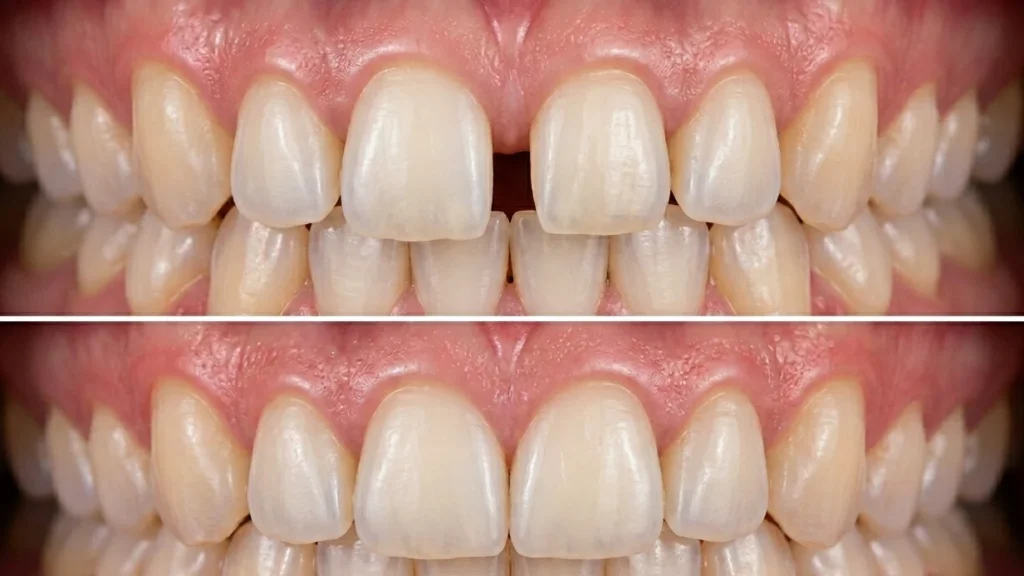
Composite veneers before and after
Composite veneers can be a great option for patients who want a conservative, budget-conscious improvement. They are made from tooth-coloured resin and shaped directly onto the tooth. Composite veneers may require less enamel removal and fewer dental visits, and they are easier to repair if damaged, although they are generally less stain-resistant and wear-resistant than porcelain.
A composite Veneer before and after result can improve small chips, uneven edges, mild gaps, and discolouration. Because composite is sculpted by the dentist, the artistic skill of the clinician matters a lot.
Benefits of composite veneers
- Often completed faster than porcelain
- Usually lower cost
- Can be repaired more easily
- May require minimal tooth preparation
- Useful for small cosmetic corrections
Limitations of composite veneers
- More likely to stain over time
- May need polishing and maintenance
- Usually shorter lifespan than porcelain
- Not always ideal for large colour changes or major smile makeovers
Patients often ask about composite veneers Dubai price because they want an affordable smile upgrade. Cost matters, but the cheapest option is not always the best value if it chips, stains, or looks bulky after a short time.
Porcelain veneers before and after
Porcelain veneers are often chosen for high-end smile makeovers because they offer excellent aesthetics, durability, and stain resistance. They are custom-made in a dental laboratory and then bonded to prepared teeth.
A porcelain Veneer before and after case can correct deeper discolouration, worn edges, uneven shapes, small gaps, and smile asymmetry. Porcelain reflects light in a way that can look very similar to natural enamel, especially when the shade is chosen carefully.
Why patients choose porcelain veneers
- Natural translucency
- Strong stain resistance
- Excellent colour stability
- Long-lasting aesthetics
- Customised smile design
- Suitable for multiple front teeth
Peer-reviewed research has reported high long-term survival for porcelain laminate veneers when properly planned and bonded, with some studies showing strong 10-year outcomes. Still, veneers are not indestructible. Grinding, nail biting, chewing ice, poor oral hygiene, or using teeth as tools can shorten their lifespan.
A porcelain Veneer before and after result should not look flat or opaque. The most refined veneers have texture, translucency, and natural edge detail.
Visit the patient connection hub section to check your condition, learn more about it, and connect with Dr Nidhal Sultan.

Ceramic veneers before and after
Ceramic veneers is a broad term that can include porcelain veneers and newer high-strength ceramic systems. These materials are popular because they can combine strength with lifelike beauty.
A ceramic Veneer before and after transformation may be recommended when a patient wants a highly customised smile with excellent aesthetics. Ceramic can be layered, stained, glazed, and shaped to mimic natural enamel. Depending on your case, the dentist may choose a more translucent ceramic for a natural look or a stronger, more opaque ceramic to mask darker tooth colour.
Ceramic veneers may be especially useful for:
- Moderate to significant discolouration
- Worn or aged front teeth
- Multiple-tooth smile makeovers
- Patients wanting a premium aesthetic outcome
- Cases where colour stability is a priority
The key is not simply choosing “ceramic.” It is choosing the right ceramic, the right thickness, the right bonding protocol, and the right dentist-laboratory collaboration. This is where a personalised Veneer before and after assessment makes a major difference.
Discover more about other comsetic dentistry solutions offered by Dr Nidhal Sultan in Dubai.
how much are veneers in dubai
The cost of veneers in Dubai varies widely. Published Dubai and UAE clinic price guides commonly show composite veneers starting from several hundred dirhams per tooth, while porcelain or ceramic veneers may range from around AED 1,000 to AED 5,500+ per tooth depending on the clinic, material, dentist expertise, and laboratory standards.
In practical terms, teeth veneers cost in Dubai depends on whether you are treating one tooth, six upper front teeth, eight to ten smile-zone teeth, or a full upper and lower smile makeover.
Estimated Dubai veneer price ranges
|
Veneer type
|
Estimated price range per tooth in Dubai
|
|---|---|
|
Composite veneers
|
Around AED 500–1,500+
|
|
Porcelain veneers
|
Around AED 1,000–4,000+
|
|
Premium ceramic veneers
|
Around AED 2,500–5,500+
|
These are general market estimates, not a quotation. The only accurate way to know your fee is to have a consultation, smile assessment, and treatment plan.
Budget matters in every Veneer before and after decision, but value matters more. A low upfront price can become expensive if the veneers stain early, chip repeatedly, irritate the gums, or need replacement sooner than expected.
Factors That Influence the Final Price of Your Smile Makeover
The final cost is not only about the number of veneers. It reflects the detail and quality behind the result.
Important price factors include:
- Material: Composite, porcelain, and premium ceramic have different costs.
- Number of teeth: A single tooth costs less than a full smile design.
- Case complexity: Dark teeth, old restorations, gum issues, or bite problems require more planning.
- Laboratory quality: High-end ceramic work requires experienced technicians.
- Technology: Digital scans, smile design, mock-ups, and photography may affect the fee.
- Dentist experience: Advanced cosmetic skill can influence both aesthetics and longevity.
- Additional treatments: Whitening, gum contouring, fillings, orthodontics, or night guards may be needed.
When comparing veneers Dubai options, do not compare price alone. Ask what is included, who makes the veneers, whether temporaries are provided, how the bite is checked, and what maintenance support is available after treatment.
In a premium Veneer before and after plan, the dentist is not only changing the colour of your teeth. They are designing a smile that works with your lips, gums, bite, and facial proportions.
Try the online Dr Nidhal’s smart smile assessment and provide him with pre-consultation, valuable information to help diagnose and fix your problem.
Are veneers permanent??
Veneers are considered a long-term treatment. Traditional porcelain and ceramic veneers often require removal of a small amount of enamel, which means the tooth will usually need a veneer or another restoration in the future. For that reason, veneers are not usually described as fully reversible. Small amount of tooth structure may be removed to make room for porcelain veneers and avoid a bulky appearance.
No-prep veneers may be reversible in selected cases, but only when the tooth structure has not been altered and the final result does not create bulk or bite problems. Many patients are not suitable for no-prep veneers.
Before committing, ask your dentist:
- Will enamel be removed?
- How much tooth preparation is expected?
- Are no-prep veneers suitable for my case?
- What happens if a veneer chips or debonds?
- How will my bite be protected?
A responsible Veneer before and after plan should improve your smile without ignoring the long-term health of your natural teeth.
Discover the case studies and real transformations achieved through expert care, advanced techniques, and a refined dental experience with Dr. Nidhal Sultan.

Do veneers hurt??
Most patients do not describe veneers as painful. You may feel pressure, vibration, or mild sensitivity during or after preparation. Local anaesthetic can be used when enamel reduction or gum work is needed. Temporary veneers may feel slightly different for a few days, and the final veneers may require small bite adjustments.
You should contact your dentist if you feel sharp pain, ongoing sensitivity, bleeding gums, a high bite, or a veneer that feels loose. Discomfort should not be ignored because it may indicate bite imbalance, gum irritation, bonding issues, or an underlying dental problem.
A comfortable Veneer before and after experience depends on proper planning, gentle technique, healthy gums, and accurate bite adjustment.
Take a look at Dr Nidhal’s gallery and discover the real results, from cosmetic enhancements to restorative dental work.
Can veneers get stained??
Porcelain and ceramic veneers are highly stain-resistant, but they are not completely immune to surface marks. Composite veneers can stain more easily because resin is more porous than porcelain.
Common staining risks include:
- Coffee and tea
- Red wine
- Smoking or vaping
- Dark sauces
- Poor brushing and flossing
- Abrasive toothpaste
- Irregular professional cleaning
Natural teeth around the veneers can still change colour. That means if you whiten your natural teeth after veneer placement, they may become lighter than the veneers, creating a mismatch. Whitening products use peroxide-based agents to break stains into smaller pieces, but whitening is primarily designed for natural tooth structure, not ceramic restorations.
If you are planning whitening, it is usually better to whiten your teeth before selecting the veneer shade. For long-lasting Veneer before and after results, shade planning should happen before the final ceramic or composite work is completed.
Stay updated with the latest advancements, treatments, and patient-focused innovations from Dr. Nidhal, delivering modern, high-quality dental care in Dubai.

How to take care of veneers teeth??
Good veneer care is simple, but it must be consistent. Veneers cover the front of the tooth, but the tooth, gums, and margins still need daily cleaning.
To protect your Veneer before and after investment:
- Brush twice daily with a soft toothbrush.
- Floss every day, especially around veneer margins.
- Use non-abrasive toothpaste.
- Visit your dentist for regular check-ups and cleanings.
- Wear a night guard if you grind or clench.
- Avoid biting nails, pens, ice, or hard objects.
- Do not use your teeth to open packages.
- Limit staining habits, especially with composite veneers.
- Report chips, sensitivity, or gum bleeding early.
Healthy gums are part of a beautiful smile. Red, inflamed, or receding gums can ruin the appearance of even the most expensive veneers. Strong home care helps keep your veneer teeth looking polished, clean, and natural.
Learn more about your condition and discover the latest treatment techniques, prices, and dental solutions with Dr Nidhal’s blogs.
Why choose dr Nidhal sultan for your dental care
Choosing the right dentist is the most important decision in your veneer journey. Materials matter, but the dentist’s planning, eye for detail, bonding technique, and understanding of facial aesthetics matter even more.
Patients considering Veneer before and after treatment with Dr Nidhal Sultan can expect a personalised approach focused on natural results, not one-size-fits-all smiles. The goal is to design veneers that complement your face, support oral health, and feel comfortable in daily life.
A good veneer consultation should include:
- A clear explanation of your options
- Honest advice on whether veneers are suitable
- Discussion of composite, porcelain, and ceramic choices
- Smile design based on your facial features
- Bite evaluation
- Transparent cost planning
- Maintenance guidance after treatment
If you are ready to explore your options, you can book a consultation with Dr Nidhal Sultan in Dubai to regain your smile again.
FAQs
Are veneers bad for your teeth?
Veneers are not bad for your teeth when they are properly planned, bonded, and maintained. The risk comes from poor case selection, excessive enamel removal, untreated decay, gum disease, or an incorrect bite. A conservative Veneer before and after plan should preserve as much natural tooth structure as possible.
Can veneers cause bad breath?
Veneers do not directly cause bad breath. Bad breath may happen if plaque builds up around the veneer edges, if there is gum inflammation, if a veneer does not fit properly, or if decay develops around the margin. Daily flossing, professional cleaning, and good veneer fit are essential.
How long do porcelain veneers last?
Porcelain veneers often last around 10 to 15 years, and some last longer with excellent care. Research on porcelain laminate veneers shows strong long-term survival when veneers are bonded well and patients maintain good oral habits. Longevity depends on enamel bonding, bite forces, hygiene, diet, grinding, and regular dental visits.
How to cement veneers?
Veneers should only be cemented by a qualified dentist. The process involves cleaning and preparing the tooth and veneer surface, using bonding agents, placing resin cement, curing it with a dental light, and checking the bite. Do not try to cement a veneer at home because the wrong material or fit can damage the tooth, irritate the gum, or cause the veneer to fail.
How to whiten veneers?
Veneers cannot be whitened like natural teeth. If they look dull, a dentist may polish them, clean surface stains, repair composite, or replace old veneers. Whitening should usually be done before veneers so the final shade matches your brighter natural teeth.
Are veneers reversible?
Traditional porcelain and ceramic veneers are usually not reversible because a small amount of enamel may be removed. Some no-prep veneers may be reversible in selected cases, but they are not suitable for everyone. Always ask your dentist how much enamel will be changed before treatment.
Can veneers be whitened?
No. Whitening gels do not change the internal colour of porcelain or ceramic veneers the way they can lighten natural enamel. If the surrounding teeth whiten but veneers do not, the smile can look uneven. A dentist may recommend polishing, replacing, or adjusting the overall smile plan.
Can you get veneers when pregnant?
Many dental treatments can be performed during pregnancy when necessary, and the ADA states that preventive, diagnostic, and restorative dental treatment is safe throughout pregnancy. HRSA also notes that many dental procedures, including exams, cleanings, fillings, crowns, and root canals, are generally safe during pregnancy. However, elective cosmetic treatment is often postponed until after delivery for comfort, timing, and planning reasons. If you are pregnant, tell your dentist and coordinate care with your obstetrician when needed.
Conclusion
A beautiful Veneer before and after result is not about copying a celebrity smile. It is about creating the best version of your own smile while keeping your teeth and gums healthy. Veneers can correct stains, chips, gaps, worn edges, and uneven shapes, but the final result depends on diagnosis, material choice, planning, and clinical skill.
For patients in Dubai, the smartest first step is not choosing a shade from a chart. It is booking a consultation with a dentist who can evaluate your smile, explain your options, and show you what is realistic for your teeth. Dr Nidhal Sultan can help you understand whether composite, porcelain, or ceramic veneers are the right fit for your goals.
If you are comparing Veneer before and after photos, look for results that appear natural, balanced, and healthy. The best smile makeover should make people notice your confidence first, not your dental work.